




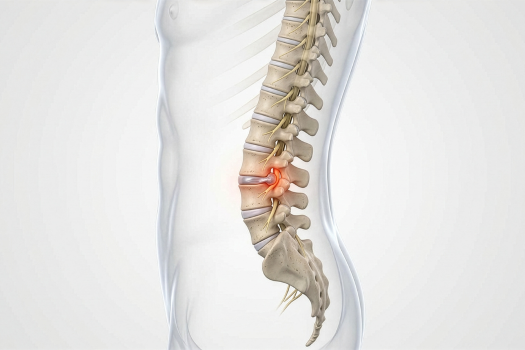
Lumbar discectomy produces lasting relief for the majority of patients. Most people who undergo the procedure experience significant reduction in leg pain and return to normal function within several months. Success rates generally range from 85 to 90 percent for radicular symptom relief, though outcomes vary based on patient health, surgical timing, and postoperative care. In this article, we take a closer look at the clinical evidence behind these outcomes, what recovery timelines look like at each stage, and which factors most reliably predict long-term success.
What Does Long-Term Success Look Like after Lumbar Discectomy?
Long-term success after lumbar discectomy is defined by sustained reduction in leg pain, restored physical function, and low rates of reoperation. Studies following patients for five to ten years consistently show that 80 to 90 percent report meaningful improvement compared to their presurgical condition. Crucially, leg pain relief is far more durable than back pain relief, which means patients with predominantly radicular symptoms fare better than those whose primary complaint is axial low back pain.
Functional outcomes are equally strong. Most patients return to light activity within a few weeks, resume desk work within several weeks, and regain full physical capacity, including manual labor or athletic activity, between a few and several months. For the majority, these gains hold over time without significant deterioration.
How Does the Recovery Timeline Progress in the First Year after Surgery?
Recovery from lumbar discectomy follows a predictable trajectory that most patients complete within six to twelve months. In the first two weeks, the priority is wound healing and controlling inflammation. Pain levels typically drop sharply within days of surgery, particularly the shooting leg pain that brought most patients to the operating table.
By approximately weeks four to six, most patients are cleared for light exercise and progressive walking. Physical therapy typically begins around this point, focusing on core stabilization and movement reeducation. Roughly between months two and three, patients commonly report they feel close to normal for daily tasks, though surgical tissue healing continues at the cellular level well beyond this point.
The final phase of recovery (return to full loading, sports, or physically demanding work) occurs between about three and six months. A small percentage of patients take up to twelve months to reach their personal baseline, particularly those who had prolonged presurgical nerve compression or who had significant muscle deconditioning before the operation.
Which Patient Factors Most Strongly Predict a Successful Surgical Outcome?
The single strongest predictor of a good outcome is the duration of symptoms before surgery. Patients who undergo discectomy after a shorter duration of symptoms generally achieve better neurological recovery than those who wait longer. Prolonged nerve compression causes progressive axonal damage that surgery cannot fully reverse.
Age, overall health, and smoking status also influence outcomes. Younger patients with no systemic conditions and who do not smoke consistently show faster healing and higher satisfaction rates. Obesity increases surgical complexity and slows rehabilitation, though it does not reliably predict poor long-term outcomes on its own.
Psychological factors play a measurable role as well. Patients with presurgical anxiety, depression, or catastrophic pain thinking have lower reported satisfaction scores even when their physical recovery is objectively successful. Addressing these factors before and after surgery is increasingly recognized as part of comprehensive discectomy care.
What Is the Risk of Disc Reherniation and How Does It Affect Long-Term Prognosis?
Disc reherniation is the most common complication following lumbar discectomy, occurring in approximately five to fifteen percent of cases within five years. It is more likely in younger, more active patients and in cases where a larger fragment was removed, leaving the disc structurally compromised.
When reherniation occurs, it does not automatically require a second surgery. Many cases resolve with conservative management, including physical therapy, anti-inflammatory medication, and activity modification. Revision surgery is typically reserved for patients with recurrent severe radiculopathy that fails to respond to nonoperative treatment over six to twelve weeks.
Importantly, even patients who experience reherniation generally report better long-term outcomes than if they had never had the initial surgery at all. The baseline improvement achieved through the first procedure tends to persist, and revision surgery for reherniation has comparable success rates to the original procedure in appropriately selected patients.
How Do Minimally Invasive Techniques Compare to Open Discectomy for Long-Term Results?
Minimally invasive lumbar discectomy, including microdiscectomy and endoscopic approaches, produces equivalent long-term outcomes to traditional open discectomy while offering advantages in the early recovery period. Patients undergoing minimally invasive procedures typically experience less postoperative pain, shorter hospital stays, and faster return to work.
At the two- and five-year mark, however, clinical outcomes between techniques converge substantially. Rates of pain relief, functional improvement, and reoperation are statistically comparable across approaches when surgeon experience and patient selection are consistent. The choice of technique is therefore guided primarily by surgeon expertise, anatomy, and the extent of disc pathology rather than a clear long-term advantage of one approach over another.
Endoscopic discectomy is growing in adoption and shows promising results, particularly for contained herniations, but long-term data beyond five years remain less robust than the extensive literature supporting microdiscectomy.
What Lifestyle Changes Support the Best Long-Term Outcomes after Discectomy?
Sustained recovery depends heavily on what patients do in the months and years following surgery. Regular exercise, particularly core strengthening, aerobic conditioning, and flexibility training, reduces the risk of recurrence and protects adjacent spinal segments from accelerated degeneration. Patients who engage in structured rehabilitation programs report higher satisfaction and lower reoperation rates at five years compared to those who receive surgery alone without follow-up physical therapy.
Ergonomic adjustments at work and home matter as well. Prolonged sitting, poor lifting mechanics, and sedentary behavior following surgery accelerate disc degeneration at adjacent levels. Patients who return to physically demanding jobs benefit from formal return-to-work programs that gradually reintroduce load while reinforcing safe movement patterns.
Weight management, smoking cessation, and adequate sleep are the three lifestyle factors most strongly linked to durable surgical outcomes. Each of these directly influences disc health, immune function, and the body’s capacity for tissue repair.
Frequently Asked Questions
How long does pain relief from lumbar discectomy typically last?
For most patients, relief from radicular leg pain is durable for five years or more. A small percentage experience symptom recurrence due to reherniation or adjacent segment degeneration.
Is lumbar discectomy a permanent fix for a herniated disc?
No, but it provides lasting relief for the majority. The underlying disc remains vulnerable to further degeneration, which is why post-surgical lifestyle habits are critical to long-term results.
When can I return to work after lumbar discectomy?
Generally, sedentary workers return within a few weeks. Physically demanding jobs typically require several weeks to a few months, depending on the nature of the work and the pace of individual recovery.
What percentage of lumbar discectomy patients need a second surgery?
Approximately five to fifteen percent of patients require a revision procedure within five years, most often due to reherniation or recurrent disc herniation at the same or an adjacent level.
Does lumbar discectomy help with back pain or only leg pain?
Discectomy is most effective for leg pain caused by nerve compression. Relief of back pain is less predictable, and patients whose primary complaint is back pain alone are generally not considered ideal surgical candidates.
Although lumbar discectomy is generally a very successful form of back surgery, a hole is left in the outer wall of the disc. Patients with a large hole in the outer ring of the disc are more than twice as likely to reherniate after surgery. Barricaid is a bone-anchored device designed to reduce the likelihood of reherniation by closing the large hole often left in the spinal disc after discectomy or microdiscectomy. In a large-scale study, 95 percent of Barricaid patients did not undergo a reoperation due to reherniation in the 2-year study timeframe. This treatment is done immediately following the discectomy—during the same operation—and does not require any additional incisions or time in the hospital.
If you have any questions about the Barricaid treatment or how to get access to Barricaid, ask your doctor or contact us today.
For full benefit/risk information, please visit: https://www.barricaid.com/instructions.
Comments